Lung Cancer Treatment
Systemic therapy for non-small cell and small cell lung cancer. Treatment selection based on tumor molecular profiling: EGFR, ALK, ROS1, BRAF, KRAS G12C mutations, PD-L1 expression.
What You Should Know About Lung Cancer
Lung cancer is the leading cause of cancer death worldwide. Each year, over 55,000 new cases are diagnosed in Russia alone. But over the past decade, treatment of this disease has changed dramatically.
The fundamental division: non-small cell lung cancer (NSCLC) — approximately 85% of cases — and small cell lung cancer (SCLC) — approximately 15%. Within NSCLC, adenocarcinoma, squamous cell carcinoma, and large cell carcinoma are distinguished — each has its own treatment characteristics.
The revolution occurred thanks to molecular profiling. Today, for NSCLC it is mandatory to determine: EGFR mutations, ALK and ROS1 rearrangements, BRAF V600E mutation, RET rearrangements, MET amplification (exon 14), KRAS G12C mutation, NTRK rearrangements, and PD-L1 expression. Each of these findings determines a specific therapeutic approach.
Lung cancer is not a single disease. It encompasses dozens of different diseases with different targets and different treatments. The molecular profile of the tumor determines which therapy will work.

Key Subtypes of Lung Cancer
EGFR mutations, ALK, ROS1 rearrangements, and others. Found in approximately 20-30% of patients with lung adenocarcinoma. The presence of a driver mutation means tumor growth depends on one specific molecular alteration — and a precision drug exists to target it.
Targeted therapy: for EGFR — osimertinib (first-line). For ALK — alectinib, lorlatinib. For ROS1 — crizotinib, entrectinib. For BRAF V600E — dabrafenib + trametinib. For KRAS G12C — sotorasib. For RET — selpercatinib. For MET exon 14 — capmatinib, tepotinib.
First-line targeted therapyImmunotherapy is the backbone of treatment. In the absence of targetable mutations, the key factor is PD-L1 expression. With high expression (PD-L1 ≥50%), pembrolizumab monotherapy is an option. With low or moderate expression, a combination of immunotherapy with chemotherapy is used.
Key regimens: pembrolizumab + chemotherapy (KEYNOTE-189), atezolizumab + bevacizumab + chemotherapy (IMpower150), nivolumab + ipilimumab + chemotherapy (CheckMate 9LA). The choice is determined by PD-L1 level, histological type, and patient condition.
PD-L1 determines strategyMost commonly associated with smoking. Driver mutations in squamous cell carcinoma are significantly less frequent than in adenocarcinoma. Nevertheless, molecular testing is mandatory — EGFR mutations, ALK and ROS1 rearrangements have been described in this histological type as well.
Treatment backbone: combination of immunotherapy with platinum-based chemotherapy and taxanes. With PD-L1 ≥50%, pembrolizumab monotherapy is an option. Bevacizumab is not used in squamous cell carcinoma due to the risk of bleeding.
Immunotherapy + chemotherapyThe most aggressive form. Characterized by rapid growth and early metastasis. Almost always associated with smoking. Divided into limited and extensive stages. Highly sensitive to first-line therapy, but with frequent recurrences.
Modern approach: for extensive-stage disease — chemotherapy (etoposide + carboplatin/cisplatin) in combination with immunotherapy: atezolizumab (IMpower133) or durvalumab (CASPIAN). This is the new standard that has significantly improved overall survival in SCLC.
Immunotherapy changed the standardMolecularly-Directed Lung Cancer Treatment
Lung cancer is perhaps the area of oncology where molecular profiling has changed clinical practice most radically. Today, more than eight clinically significant molecular targets are known, each with effective targeted agents available.
We insist on comprehensive molecular testing before starting treatment. This is crucial — because prescribing immunotherapy to a patient with an EGFR mutation or ALK rearrangement is not only ineffective but potentially harmful. And timely identification of a driver mutation opens the door to targeted therapy that can control the disease for many years.
What is assessed during workup:
- EGFR mutations (exons 18-21) — the most common targetable alteration in lung adenocarcinoma
- ALK rearrangements — the second most common targetable alteration, more frequent in young non-smokers
- ROS1 rearrangements — rare (1-2%) but highly sensitive to targeted therapy
- BRAF V600E mutation — indication for dabrafenib + trametinib combination
- KRAS G12C mutation — until recently an "undruggable" target, now addressed by sotorasib
- RET rearrangements, MET amplification (exon 14), NTRK rearrangements
- PD-L1 expression — determines immunotherapy strategy in the absence of driver mutations
Sequential Therapy Strategy
In lung cancer, not only the first-line treatment is critically important, but also a well-planned sequential therapy strategy — what to prescribe upon progression and why.
- For EGFR mutation: osimertinib in the first line. Upon progression — repeat biopsy to determine the resistance mechanism (T790M, MET amplification, transformation to SCLC). Further management depends on the results.
- For ALK rearrangement: alectinib or lorlatinib in the first line. Upon progression — NGS to identify resistance mutations and select the next ALK inhibitor.
- In the absence of targets: immunotherapy + chemotherapy in the first line. Upon progression — consideration of docetaxel +/- ramucirumab, enrollment in clinical trials.
All prescriptions are based on clinical trial data and NCCN, ESMO, RUSSCO guidelines.
Systemic Therapy for Lung Cancer
Treatment selection is determined by the histological tumor type, molecular profile, disease stage, and overall patient condition.
Precise targeting of a specific molecular alteration on which tumor growth depends. When a driver mutation is present, targeted therapy is the first-line treatment, surpassing chemotherapy in both efficacy and tolerability.
Key agents for lung cancer: osimertinib (EGFR, including T790M). Alectinib, lorlatinib (ALK). Crizotinib, entrectinib (ROS1). Dabrafenib + trametinib (BRAF V600E). Sotorasib (KRAS G12C). Selpercatinib (RET). Capmatinib, tepotinib (MET exon 14). Larotrectinib, entrectinib (NTRK).
Activation of the antitumor immune response using checkpoint inhibitors. Revolutionized the treatment of lung cancer without driver mutations. For the first time, it enabled durable responses in a significant proportion of patients.
Key agents: pembrolizumab (KEYNOTE-024/189) — monotherapy for PD-L1 ≥50% or in combination with chemotherapy. Atezolizumab (IMpower150/130). Nivolumab + ipilimumab (CheckMate 227/9LA). Durvalumab — consolidation after chemoradiation therapy for stage III (PACIFIC).
Remains an important component of lung cancer treatment. For NSCLC without driver mutations — in combination with immunotherapy. For SCLC — the backbone of treatment combined with immunotherapy agents. Platinum doublets are the standard foundation of first-line chemotherapy.
Key regimens: carboplatin/cisplatin + pemetrexed (non-squamous NSCLC). Carboplatin + paclitaxel/nab-paclitaxel (squamous NSCLC). Etoposide + carboplatin/cisplatin (SCLC). Docetaxel +/- ramucirumab (second-line).
The combination of immunotherapy and chemotherapy has become the new first-line standard for lung cancer without driver mutations. Combinations of multiple immunotherapy agents (nivolumab + ipilimumab) have also shown efficacy in certain settings.
Key combinations: pembrolizumab + carboplatin + pemetrexed (KEYNOTE-189) — standard for non-squamous NSCLC. Atezolizumab + bevacizumab + carboplatin + paclitaxel (IMpower150). Nivolumab + ipilimumab + 2 cycles of chemotherapy (CheckMate 9LA). Atezolizumab/durvalumab + etoposide + carboplatin (SCLC).
Expertise in Lung Cancer Treatment

Dr. Ledin has over 20 years of experience in systemic lung cancer treatment — from classical chemotherapy to modern targeted therapy and immunotherapy.
Lung cancer is one of the specialties where progress over the past 10 years has been most dramatic. The advent of tyrosine kinase inhibitors for EGFR- and ALK-positive tumors, the introduction of immunotherapy, the discovery of new targets (KRAS G12C, MET, RET) — all of this has fundamentally changed treatment approaches. Dr. Ledin has been part of this process as both a researcher and a practicing oncologist.
Scientific Activity
- Over 60 scientific publications in leading international journals: The Lancet, The Lancet Oncology, Journal of Clinical Oncology (JCO), New England Journal of Medicine (NEJM)
- Participation in over 30 international clinical trials, including pivotal phase III registration studies in immunotherapy and targeted therapy for lung cancer
- Member of RUSSCO, ESMO, ASCO — regular participant in leading global oncology congresses
Professional Society Memberships
RUSSCO — Russian Society of Clinical Oncology. ESMO — European Society for Medical Oncology. ASCO — American Society of Clinical Oncology.
How to Start Treatment
From your first inquiry to the start of treatment — a clear and transparent process at every step.
You call or submit a request on the website. Our coordinator clarifies details, helps gather necessary documents (histopathology report, CT scans, molecular testing results if available) and schedules a convenient consultation time.
The doctor thoroughly reviews the medical history, histopathology and molecular testing results. If molecular profiling has not been performed or is incomplete, the necessary tests are ordered. This is essential before starting treatment.
Based on the complete molecular tumor profile, disease stage, histological type, and comorbidities, an individualized treatment strategy is developed. First-line and subsequent therapy options, potential side effects, and monitoring schedule are discussed.
Treatment is provided in comfortable outpatient settings. Regular efficacy monitoring (CT scans every 8-12 weeks), tolerability assessment, and timely therapy adjustments as needed.
Questions About Lung Cancer Treatment
For non-small cell lung cancer (especially adenocarcinoma), the following must be determined before starting treatment:
- EGFR mutations (exons 18, 19, 20, 21) — the most common targetable alteration. When a mutation is present, the first-line treatment is osimertinib (a third-generation tyrosine kinase inhibitor).
- ALK rearrangements — found in 3-5% of patients. First-line treatment is alectinib or lorlatinib (next-generation ALK inhibitors).
- ROS1 rearrangements — a rare target (1-2%). First-line treatment is crizotinib or entrectinib.
- BRAF V600E mutation — indication for dabrafenib + trametinib combination.
- KRAS G12C mutation — sotorasib (Lumakras).
- RET rearrangements — selpercatinib. MET exon 14 skipping mutation — capmatinib, tepotinib.
- PD-L1 expression — determines immunotherapy strategy in the absence of the above targets.
The optimal approach is comprehensive genomic profiling (NGS), which can identify all significant targets in a single test. We recommend not starting treatment until molecular testing results are available — except in emergency situations.
These are fundamentally different approaches, although both fall under "modern" therapy:
Targeted therapy — precision targeting of a specific molecular alteration (mutation or rearrangement) on which tumor growth depends. It only works when this target is present. For example, osimertinib blocks the mutant EGFR protein that drives tumor growth. It is given in tablet form, long-term, until progression.
Immunotherapy — releasing the "brakes" on the immune system, which then recognizes and destroys tumor cells. It works through the PD-1/PD-L1 or CTLA-4 pathways. It does not require a specific mutation, but efficacy depends on PD-L1 expression and other factors. It is administered intravenously (typically every 3-4 weeks).
Important: in the presence of driver mutations (EGFR, ALK, ROS1), immunotherapy is generally ineffective and not indicated. This is precisely why molecular testing must be performed before starting any treatment.
Yes, small cell lung cancer (SCLC) is treatable, although it is an aggressive form of the disease. SCLC is highly sensitive to chemotherapy and radiation therapy — a response to first-line treatment is achieved in the majority of patients.
The current standard of care for extensive-stage SCLC is chemotherapy (etoposide + platinum agent) in combination with immunotherapy. Two pivotal trials confirmed the efficacy of this approach:
- IMpower133 — atezolizumab + chemotherapy
- CASPIAN — durvalumab + chemotherapy
Both combinations significantly improve overall survival compared to chemotherapy alone and represent the new standard of care.
For limited-stage SCLC, the backbone of treatment remains concurrent chemoradiation therapy — simultaneous chemotherapy and radiation therapy.
The prognosis for SCLC is serious, but modern approaches can significantly improve both the duration and quality of life.
Progression does not mean the end of treatment options. In lung cancer, there are second, third, and subsequent lines of therapy. The key question is why progression occurred and what resistance mechanism has developed.
When progression occurs, we recommend:
- Repeat biopsy (tissue or liquid — ctDNA in blood) to determine the resistance mechanism
- Comprehensive genomic profiling — new mutations may have emerged that determine the next steps
- Treatment strategy reassessment based on the new data
Examples: upon progression on osimertinib (EGFR), MET amplification may be identified, allowing the addition of a MET inhibitor. Upon progression on alectinib (ALK), identifying the specific resistance mutation helps select the next ALK inhibitor.
This is precisely why it is so important to be managed by a single specialist who sees the full picture and can build a multi-step treatment strategy.
The initial consultation fee is 29,000 rubles.
The consultation includes:
- Detailed review of all medical documentation, CT scan data, histopathology, and molecular testing results
- Assessment of the current situation: stage, molecular profile, extent of disease
- Recommendations for additional workup if molecular profiling has not been performed or is incomplete
- An individualized treatment plan with rationale for the selection of each agent
- Discussion of the sequential therapy strategy — not just the first line, but subsequent lines as well
- Answers to all your questions — with no time limit
To schedule, call +7 (917) 520-45-89, message us on WhatsApp or Telegram, or submit a request through the form on this website.
More details about pricing for all services — on the Pricing.
Schedule a Consultation
Tell us about your situation — we will help determine the next steps
Or contact us directly:
Related Articles and Sections
Blog Articles on Lung Cancer
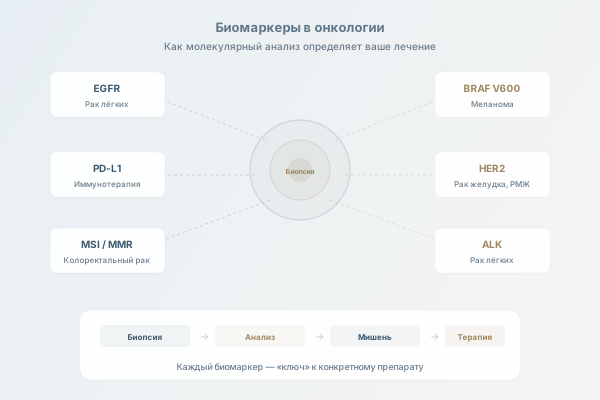
How the tumor's molecular profile determines treatment selection and why therapy should not begin without testing results.
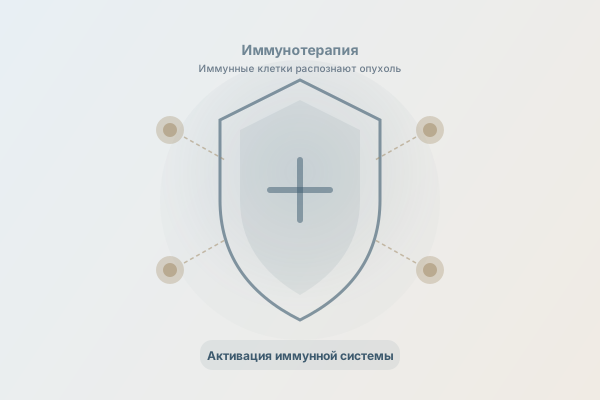
PD-L1 expression, pembrolizumab, combination regimens — what patients need to know about modern immunotherapy.
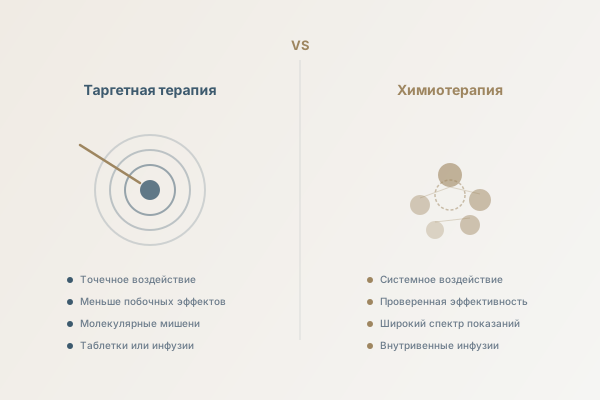
An overview of targeted agents for lung cancer: which targets exist, which drugs are available, and what to expect from treatment.
Other Treatment Specialties
Treatment of gastric, colorectal, pancreatic, and liver cancer. Precision approach based on the molecular profile.
Learn more →Breast cancer treatment based on molecular subtype: hormonal therapy, targeted therapy, immunotherapy, chemotherapy.
Learn more →Independent expert assessment of diagnosis and treatment plan. Verification of prescriptions based on international standards.
Learn more →