Breast Cancer Treatment in Moscow
Treatment selection based on the molecular subtype of the tumor. It is not just a diagnosis but the precise biological profile of your disease that determines the treatment strategy.
What You Should Know About Breast Cancer
Breast cancer is the most common cancer in women. In Russia, over 70,000 new cases are diagnosed annually.
But a single diagnosis conceals completely different diseases. The molecular subtype of the tumor is the key to understanding how it will behave and which treatment will be most effective.
That is why we begin not with prescribing treatment, but with determining the complete biological profile of the tumor: histological type, estrogen and progesterone receptors (ER/PR), HER2 status, Ki-67 proliferation index, BRCA1/2 mutations, PD-L1 expression.
Two patients with the same breast cancer diagnosis may need completely different treatments. The molecular subtype determines everything.

Molecular Subtypes of Breast Cancer
Hormone-dependent, slow-growing. The most favorable prognosis among all subtypes. The tumor is hormone-sensitive (ER+, PR+, HER2-, low Ki-67).
Primary treatment: hormonal therapy (tamoxifen, aromatase inhibitors). In many cases, chemotherapy can be avoided, significantly reducing the burden on the body.
Favorable prognosisHormone-dependent, but more aggressive. Differs from Luminal A by a higher Ki-67 proliferation index, indicating faster tumor growth (ER+, PR+/-, HER2+/-, high Ki-67).
Primary treatment: hormonal therapy combined with chemotherapy. In the HER2+ variant, targeted therapy is added. Monitoring and timely regimen adjustment are essential.
Requires a combined approachAggressive, but responsive to targeted therapy. HER2 protein overexpression makes the tumor fast-growing, however, this very marker became a target for precision drugs (ER-, PR-, HER2+).
Primary treatment: targeted therapy — trastuzumab, pertuzumab, T-DXd (trastuzumab deruxtecan). The advent of targeted agents has dramatically improved the prognosis for this subtype.
Prognosis significantly improvedThe most aggressive subtype. The tumor lacks estrogen, progesterone, and HER2 receptors (ER-, PR-, HER2-), limiting targeted therapy options.
Primary treatment: chemotherapy as the cornerstone. However, with positive PD-L1 expression, immunotherapy (pembrolizumab) may be effective. PARP inhibitors for BRCA1/2 mutations are also being studied.
New approaches are actively being studiedHow Treatment Is Selected
Precision oncology is an approach where treatment decisions are based not on an "average" protocol, but on the individual characteristics of a specific tumor in a specific patient.
We determine the complete biological profile of each tumor. This allows us to prescribe exactly the treatment that will be most effective for a given patient and avoid unnecessary toxicity.
What is assessed during workup:
- Histological tumor type — structure and grade of malignancy
- Estrogen and progesterone receptors (ER/PR) — hormone sensitivity
- HER2 status — target for targeted therapy
- Ki-67 proliferation index — rate of tumor cell division
- BRCA1/2 mutations — hereditary predisposition and therapy selection
- PD-L1 expression — eligibility for immunotherapy
How This Affects Treatment
Molecular diagnostic results determine:
- Whether chemotherapy will be prescribed — and if so, which specific regimen
- Whether targeted therapy is needed — and which specific drug is indicated
- Whether hormonal therapy is applicable — and the optimal duration
- Whether immunotherapy is indicated — based on PD-L1 expression data
- Disease prognosis — and recurrence risk determining follow-up intensity
Every prescription is supported by clinical trial data and international guidelines (NCCN, ESMO, RUSSCO).
Systemic Therapy for Breast Cancer
Each method is selected individually based on the molecular subtype, disease stage, and patient condition.
Systemic drug treatment aimed at destroying rapidly dividing cells. Remains the backbone of treatment for aggressive subtypes (triple-negative, Luminal B with high Ki-67).
When prescribed for breast cancer: for high tumor proliferative activity, triple-negative subtype, metastatic disease. The regimen is selected individually — from anthracyclines and taxanes to platinum-based regimens for BRCA mutations.
Precise targeting of specific molecular drivers in tumor cells. Unlike chemotherapy, it acts selectively, reducing side effects.
When prescribed for breast cancer: for HER2-positive subtype — trastuzumab, pertuzumab, trastuzumab deruxtecan (T-DXd). For BRCA1/2 mutations — PARP inhibitors (olaparib). For CDK4/6-dependent tumors — palbociclib, ribociclib.
Blocking the effect of sex hormones on tumor cells. Effective in hormone-dependent subtypes (Luminal A and B), when the tumor has estrogen and/or progesterone receptors.
When prescribed for breast cancer: for ER+ and/or PR+ tumor status. Medications include tamoxifen, aromatase inhibitors (letrozole, anastrozole, exemestane), and fulvestrant. Treatment duration ranges from 5 to 10 years.
Activating the patient's own immune system to fight the tumor. A relatively new direction in breast cancer treatment with proven efficacy under certain conditions.
When prescribed for breast cancer: primarily for the triple-negative subtype with positive PD-L1 expression. Pembrolizumab is used in combination with chemotherapy. Other combinations are also being studied.
Expertise in Breast Cancer Treatment

Dr. Ledin has over 20 years of experience in systemic breast cancer treatment.
Throughout his career, the doctor has treated patients with various molecular subtypes of breast cancer, including complex cases of metastatic and recurrent disease.
Scientific Activity
- Over 60 scientific publications, including articles in leading international journals — Journal of Clinical Oncology (JCO), The Lancet Oncology
- Participation in the development of national clinical guidelines for breast cancer treatment
- Over 30 international clinical trials, including studies of innovative breast cancer therapies
Professional Society Memberships
RUSSCO — Russian Society of Clinical Oncology. ESMO — European Society for Medical Oncology. ASCO — American Society of Clinical Oncology.
How to Start Treatment
From your first inquiry to the start of treatment — a clear and transparent process at every step.
You call or submit a request on the website. Our coordinator clarifies details, helps gather necessary documents and schedules a convenient consultation time.
The doctor reviews your medical history, test results, and histopathology report. If needed — additional workup is ordered to determine the complete molecular profile.
Based on the complete biological tumor profile, an individualized treatment plan is developed. Every prescription is explained in detail — the rationale, alternatives, and expected outcomes.
Treatment is provided in comfortable outpatient settings. At every stage — efficacy monitoring and timely adjustments as needed.
Questions About Breast Cancer Treatment
Yes, the molecular subtype is the key factor determining the breast cancer treatment strategy. It is the subtype, not just the disease stage, that determines which methods will be most effective.
For example, in Luminal A subtype the cornerstone of treatment is hormonal therapy, in HER2-positive — targeted therapy with trastuzumab, and in triple-negative — chemotherapy, possibly combined with immunotherapy.
That is why we always begin with comprehensive molecular diagnostics — to prescribe truly personalized treatment rather than a standard protocol.
In some cases — yes. For Luminal A subtype with low Ki-67, small tumor size, and no lymph node metastases, chemotherapy may not be indicated. Hormonal therapy alone may be sufficient.
The decision is based on both standard clinicopathological parameters and genomic tests (Oncotype DX, MammaPrint), which help assess individual recurrence risk and the need for chemotherapy.
However, for aggressive subtypes (HER2-positive, triple-negative, Luminal B with high Ki-67), chemotherapy remains an important component of treatment. The decision is always made on an individual basis.
Targeted therapy is the precise targeting of specific molecular drivers in tumor cells. Unlike chemotherapy, which affects all rapidly dividing cells (including healthy ones), targeted agents strike precisely at the tumor's vulnerability.
In breast cancer, the main targets include: HER2 protein (trastuzumab, pertuzumab, T-DXd), DNA repair enzymes in BRCA mutations (PARP inhibitors — olaparib), cyclin-dependent kinases CDK4/6 (palbociclib, ribociclib).
Targeted therapy is generally better tolerated than chemotherapy, although it has its own spectrum of side effects that require monitoring.
The initial consultation fee is 29,000 rubles.
The consultation includes a detailed review of all medical documentation, test results, and histopathology report. As a result, you receive:
- Assessment of your current situation and disease stage
- Recommendations for additional workup (if needed)
- An individualized treatment plan with rationale for each prescription
- Answers to all your questions — with no time limit
More details about pricing for all services — on the Pricing.
Yes, I conduct online consultations for patients from other cities or those who cannot visit in person due to their health condition.
For an online consultation, please send all test results, histopathology report, and medical records in advance. This allows the doctor to prepare and conduct the consultation as effectively as possible.
The online format is suitable for initial case assessment, obtaining a second opinion, and adjusting the treatment plan. To schedule an online consultation, contact us by phone at +7 (917) 520-45-89 or through the form on this website.
Other Specialties
Schedule a Consultation
Tell us about your situation — we will help determine the next steps
Or contact us directly:
Related Articles and Sections
Blog Articles on Breast Cancer
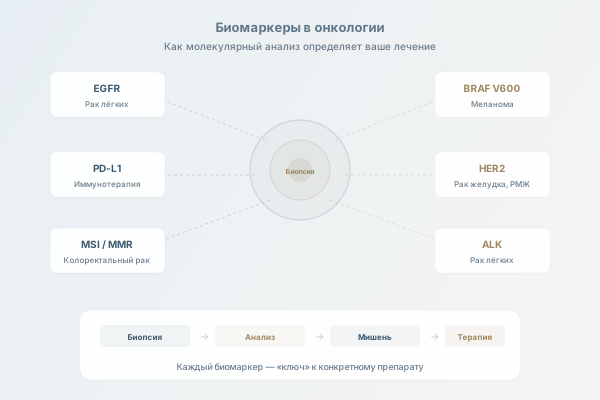
Why two seemingly identical diagnoses may require completely different treatments, and how molecular diagnostics is changing the approach to therapy.
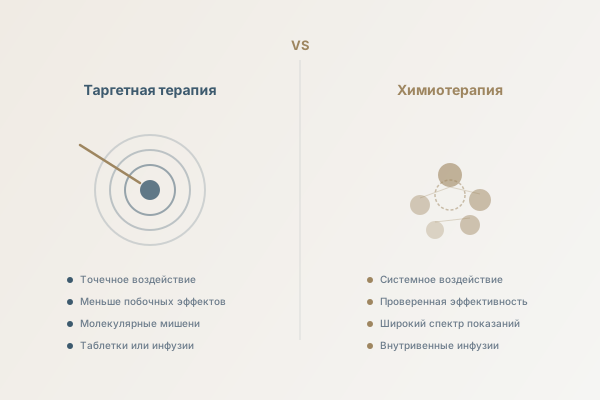
Trastuzumab, pertuzumab, T-DXd — how precision agents transformed an aggressive subtype into a disease with a favorable prognosis.
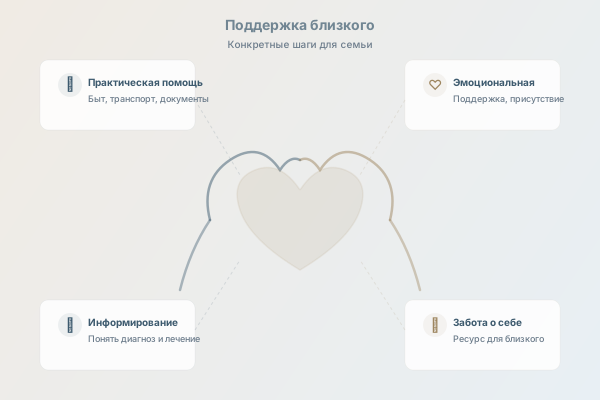
Practical advice for family members: what to say, how to help, and when to seek support for yourself.
Other Treatment Specialties
Treatment of ovarian, uterine, and cervical cancer. Modern regimens with targeted and immunotherapy agents.
Learn more →Independent expert assessment of diagnosis and treatment plan. Verification of prescriptions based on international standards.
Learn more →Treatment of gastric, colorectal, pancreatic, and liver cancer. Precision approach based on the molecular profile.
Learn more →