Melanoma Treatment
Systemic melanoma treatment based on the molecular tumor profile. BRAF mutation status determines the choice between targeted therapy and immunotherapy — and making the right decision is critical.
What You Should Know About Melanoma
Melanoma is the most aggressive malignant skin tumor. Melanoma incidence has been steadily growing by 3–5% per year, and early diagnosis remains the key prognostic factor.
However, even in advanced melanoma, the past decade has seen a true breakthrough in systemic treatment. The introduction of targeted agents and immunotherapy has dramatically improved patient survival.
The fundamental question in melanoma is the tumor mutation status. First and foremost, the presence of the BRAF V600E/K mutation is determined, which is found in 40–50% of patients with cutaneous melanoma. Beyond BRAF, NRAS and KIT mutations (especially in acral and mucosal melanoma), as well as PD-L1 expression and tumor mutational burden (TMB), are also significant.
Molecular testing in melanoma is not an optional extra — it is a mandatory step. Without determining the mutation status, it is impossible to select the optimal treatment strategy.

Clinical Variants and Molecular Subtypes of Melanoma
The BRAF V600E/K mutation is found in 40–50% of patients with cutaneous melanoma. This is an activating mutation in the MAPK/ERK signaling pathway that makes the tumor sensitive to targeted therapy with BRAF and MEK inhibitors.
Treatment approach: combination targeted therapy (BRAF + MEK inhibitors) or immunotherapy. The choice between these strategies depends on the clinical situation — rate of progression, tumor burden, and LDH levels.
~40–50% of cutaneous melanomasIn the absence of a BRAF mutation, targeted therapy with BRAF/MEK inhibitors is not applicable. The foundation of systemic treatment becomes immunotherapy — immune checkpoint inhibitors (anti-PD-1, anti-CTLA-4).
Treatment approach: nivolumab or pembrolizumab monotherapy; in aggressive cases — combination of nivolumab with ipilimumab. For NRAS mutations, clinical trials with MEK inhibitors are considered.
Immunotherapy as the foundationA rare subtype accounting for about 1–2% of all melanomas. Develops on the mucous membranes of the oral cavity, nose, rectum, vulva, and vagina. Characterized by late diagnosis and a more aggressive course.
Molecular features: BRAF mutations are significantly less common (~10–15%), while KIT mutations are more frequently detected (up to 20–30%). When a KIT mutation is present, targeted therapy with imatinib is possible. Immunotherapy is also used, although its efficacy is lower than in cutaneous melanoma.
KIT mutationsUveal melanoma is a biologically distinct disease. BRAF mutations are virtually absent. Characteristic mutations include GNAQ/GNA11 (up to 80–90%), BAP1, SF3B1, and EIF1AX.
Treatment approach: standard anti-PD-1 immunotherapy is significantly less effective than in cutaneous melanoma. The bispecific agent tebentafusp is approved for HLA-A*02:01-positive patients. New approaches are actively being studied in clinical trials.
Unique molecular profileHow Melanoma Treatment Strategy Is Developed
BRAF mutation testing is a mandatory first step. Without it, an informed decision about the treatment strategy cannot be made. The mutation status determines what will be more effective — targeted therapy or immunotherapy.
But a BRAF test alone is not enough. To select the optimal approach, we analyze a combination of molecular and clinical factors.
What is assessed during workup:
- BRAF V600E/K mutation — the key marker for targeted therapy prescription
- NRAS, KIT mutations — additional targets when BRAF is negative
- PD-L1 expression — prognostic marker of immunotherapy response
- Tumor mutational burden (TMB) — indirect predictor of immunotherapy efficacy
- Serum LDH level — prognostic factor in metastatic melanoma
- Disease stage and extent of involvement — determine treatment intensity
How Mutation Status Affects Treatment Selection
Molecular diagnostic results determine:
- BRAF V600 "+" — choice between targeted therapy (BRAF+MEK inhibitors) and immunotherapy. With rapid progression and elevated LDH, targeted therapy is often initiated first due to its faster response rate
- BRAF "−" — immunotherapy as the foundation of treatment: anti-PD-1 monotherapy or anti-PD-1 + anti-CTLA-4 combination
- Adjuvant therapy — after surgical treatment for stage III to reduce recurrence risk (nivolumab, pembrolizumab, dabrafenib+trametinib for BRAF+)
- Neoadjuvant therapy — a new approach being studied in clinical trials: treatment before surgery to assess tumor response
Every prescription is based on data from large randomized trials and follows NCCN, ESMO, and RUSSCO guidelines.
Systemic Melanoma Treatment
Each method is selected individually based on the tumor mutation status, disease stage, and the patient's clinical situation.
Precise blockade of the MAPK/ERK signaling pathway through simultaneous inhibition of BRAF and MEK kinases. Dual blockade is substantially more effective than monotherapy and reduces the rate of secondary resistance.
Combinations used: dabrafenib + trametinib, vemurafenib + cobimetinib, encorafenib + binimetinib. The specific combination is chosen based on the toxicity profile and individual tolerability. Prescribed only with a confirmed BRAF V600 mutation.
Immune checkpoint inhibitors "release the brakes" on the immune system, allowing it to recognize and destroy cancer cells. Melanoma is one of the most immunogenic tumors, making immunotherapy particularly effective.
Agents used: nivolumab (anti-PD-1), pembrolizumab (anti-PD-1), ipilimumab (anti-CTLA-4). The nivolumab + ipilimumab combination shows the highest objective response rates but is associated with greater toxicity. The decision between monotherapy and combination is made individually.
Preventive systemic treatment after surgical removal of stage III melanoma. The goal is to reduce the risk of recurrence and distant metastasis.
Regimens used: nivolumab or pembrolizumab (regardless of BRAF status); dabrafenib + trametinib (for BRAF V600+). Adjuvant therapy is administered for 12 months. Randomized trials have convincingly demonstrated a 30–50% reduction in recurrence risk.
Modern oncology actively explores combinations of different mechanisms of action: sequential administration of targeted therapy and immunotherapy in BRAF+ melanoma, combination of immunotherapy with intratumoral viruses, and bispecific antibodies.
Promising directions: tebentafusp for uveal melanoma; LAG-3 inhibitors (relatlimab) in combination with nivolumab; neoadjuvant immunotherapy before surgery. Access to the newest agents is available through clinical trials.
Expertise in Melanoma Treatment

Dr. Ledin has over 20 years of experience in systemic treatment of malignant tumors, including all forms of melanoma.
Clinical experience in melanoma treatment includes working with patients at all disease stages — from adjuvant therapy after surgery to treatment of metastatic forms with involvement of various organs.
Participation in the ADMIRE Clinical Trial
Dr. Ledin participated in the ADMIRE clinical trial dedicated to melanoma treatment. Participation in international clinical trials provides access to the most advanced therapeutic approaches and a deep understanding of the mechanisms of action of new agents.
Scientific and Professional Activities
- Over 60 scientific publications in leading oncology journals, including the Journal of Clinical Oncology (JCO) and The Lancet Oncology
- Participation in over 30 international clinical trials
- Contribution to the development of national clinical guidelines
Professional Society Memberships
RUSSCO — Russian Society of Clinical Oncology. ESMO — European Society for Medical Oncology. ASCO — American Society of Clinical Oncology.
How to Start Treatment
From the first inquiry to the start of treatment — a clear and transparent process at every step.
You call or submit a request on the website. Our coordinator clarifies details, helps gather necessary documents and schedules a convenient consultation time.
The doctor reviews your medical history, histological examination results, imaging data, and molecular testing. If BRAF testing has not yet been performed — it is ordered as a priority.
Based on the mutation status, stage, and clinical picture, an individualized strategy is developed: targeted therapy, immunotherapy, or their sequential administration. Every decision is explained in detail.
Treatment is provided in a comfortable setting with regular efficacy monitoring and side effect management. If needed — timely regimen adjustments.
Questions About Melanoma Treatment
BRAF is a gene encoding a protein kinase involved in transmitting cell growth and division signals. The BRAF V600E mutation (less commonly V600K) leads to constant activation of this signaling pathway, driving uncontrolled proliferation of tumor cells.
This mutation is found in approximately 40–50% of patients with cutaneous melanoma. Its presence is critically important because it opens the possibility of targeted therapy — precise blockade of the mutant BRAF protein and the downstream MEK protein.
In the absence of a BRAF mutation, targeted therapy with BRAF/MEK inhibitors is ineffective, and immunotherapy becomes the foundation of treatment. This is precisely why molecular testing is a mandatory step before starting systemic treatment.
Targeted therapy (BRAF + MEK inhibitors) directly blocks the molecular signals that drive tumor cell division. It works quickly — a response often occurs within a few weeks. However, over time the tumor may develop resistance to these agents.
Immunotherapy (PD-1, CTLA-4 inhibitors) does not act on the tumor directly. It activates the patient's own immune system by "releasing the brakes" that the tumor uses to evade immune surveillance. The response develops more slowly, but in some patients it can be very durable.
In BRAF-positive melanoma, the physician chooses between these strategies (or their sequence) depending on the clinical situation. In BRAF-negative melanoma, immunotherapy is the only systemic treatment method with proven efficacy.
This depends on the disease stage. In stage I–II (without lymph node involvement), adjuvant systemic therapy is generally not prescribed — regular surveillance is sufficient.
In stage III (with regional lymph node metastases), adjuvant therapy is recommended, which significantly reduces the risk of recurrence. According to large studies, adjuvant immunotherapy (nivolumab, pembrolizumab) or targeted therapy (dabrafenib + trametinib for BRAF+) reduces recurrence risk by 30–50%.
The decision to prescribe adjuvant therapy is made considering the stage, BRAF mutation status, the patient's general condition, and potential side effect risks. This is always a shared decision between the doctor and the patient.
Surgical removal of the primary tumor and affected lymph nodes remains the standard of care for operable melanoma. Systemic therapy does not replace surgery in localized disease.
However, in metastatic melanoma (stage IV), when complete surgical removal is not possible, systemic therapy — targeted or immunotherapy — becomes the primary treatment method. Tremendous progress has been made here in recent years: 5-year survival in metastatic melanoma has increased from 5–10% to 30–50% thanks to modern agents.
Additionally, neoadjuvant therapy is being actively studied — administering immunotherapy before surgery, which allows assessment of tumor response and potentially improves long-term outcomes.
The initial consultation fee is 29,000 rubles.
The consultation includes a detailed analysis of all medical documentation, histological examination results, and molecular testing. As a result, you receive:
- Assessment of disease stage and mutation status
- An individualized treatment strategy with rationale for choosing between targeted therapy and immunotherapy
- Recommendations for additional workup, if needed
- Answers to all your questions — as much time as needed
More details about pricing for all services — on the Pricing.
Other Specialties
Schedule a Consultation
Tell us about your situation — we will help determine the next steps
Or contact us directly:
Related Articles and Sections
Blog Articles on Melanoma
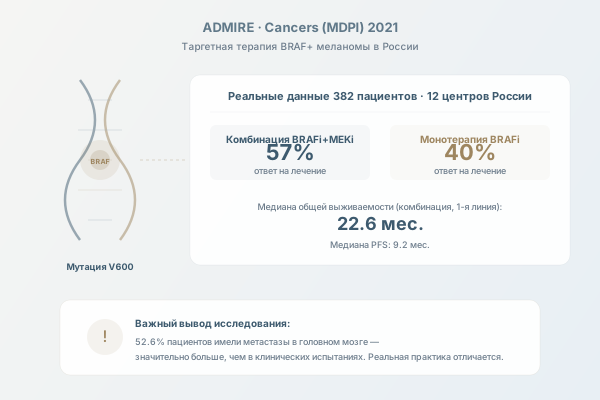
Why determining BRAF mutation status is the first step before starting any systemic melanoma treatment.

How immune checkpoint inhibitors transformed metastatic melanoma from a fatal disease into a manageable one.
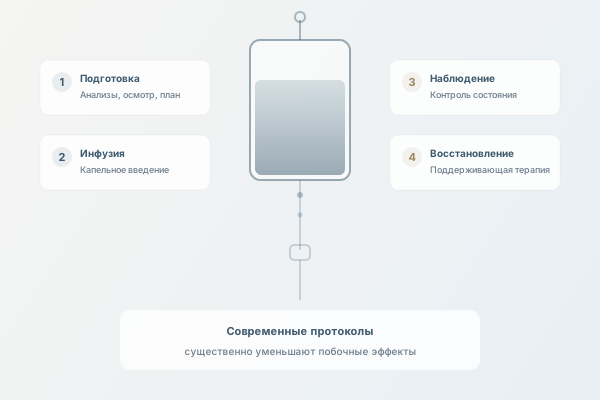
Is systemic therapy needed after stage III melanoma removal — clinical trial data and practical recommendations.
Other Treatment Specialties
Treatment of all molecular breast cancer subtypes: targeted therapy, immunotherapy, hormonal therapy, chemotherapy.
Learn more →Treatment of ovarian, uterine, and cervical cancers. Modern regimens with PARP inhibitors and immunotherapy agents.
Learn more →Independent expert evaluation of diagnosis and treatment plan based on international standards.
Learn more →